If you’re new to PC building, here’s the quick context: your CPU (the main processor chip) generates heat when it works hard, and it needs a cooler — a metal heatsink with a fan attached — to pull that heat away fast enough to keep performance stable and protect the chip long-term. The cooler clips or bolts onto the top of the CPU and uses a stack of thin aluminum or copper fins to spread the heat, then a fan blows air through those fins. “Single-tower” just means one fin stack, as opposed to dual-tower behemoths with two stacks. In 2026, the sub-$50 single-tower bracket is more competitive than it has ever been. You’ve got Cooler Master’s iconic Hyper 212 family, Arctic’s Freezer 36, Thermalright’s Peerless Assassin 120 SE, and a pair of be quiet! entries all fighting for the same wallet. This article maps every meaningful tradeoff — thermal headroom, acoustic behavior, total cost of ownership, and installation friction — so you can make a confident call.
The Field: Five Coolers, One Budget, Genuinely Different Strengths
Let’s lay out the lineup before we go deep:
| Cooler | Approx. Street Price | Fan(s) | Tower Height | Socket Support (boxed) |
|---|---|---|---|---|
| Cooler Master Hyper 212 PRO ARGB | ~$17–$22 | 1× 120mm | ~157 mm | LGA1700/1851, AM4/AM5 |
| Cooler Master Hyper 212 Black Edition | ~$35–$40 | 1× 120mm | ~158 mm | LGA1700/1851, AM4/AM5 |
| Arctic Freezer 36 | ~$30–$35 | 2× 120mm P-fans | ~154 mm | LGA1700/1851, AM4/AM5 |
| Thermalright Peerless Assassin 120 SE | ~$35–$40 | 2× 120mm | ~155 mm | LGA1700/1851, AM4/AM5 |
| be quiet! Pure Rock Pro 3 | ~$40–$50 | 1× 120mm BQ | ~155 mm | LGA1700/1851, AM4/AM5 |
Already you can see a structural divide: the Arctic Freezer 36 and Peerless Assassin 120 SE ship with dual fans for the same money the Hyper 212 Black Edition charges for one. That’s the first tradeoff to internalize.
Thermal Performance: Where the Numbers Actually Separate These Coolers
Thermalright Peerless Assassin 120 SE — The Benchmark Beater
Across published reviews at Tom’s Hardware and PCMag’s best-cooler roundup for 2025, the Peerless Assassin 120 SE consistently finishes at or near the top of its price class. Tom’s Hardware’s Thermalright Peerless Assassin 120 SE review documents the cooler punching well above its price in normalized performance comparisons against both single-fan and dual-fan designs in the sub-$50 bracket.
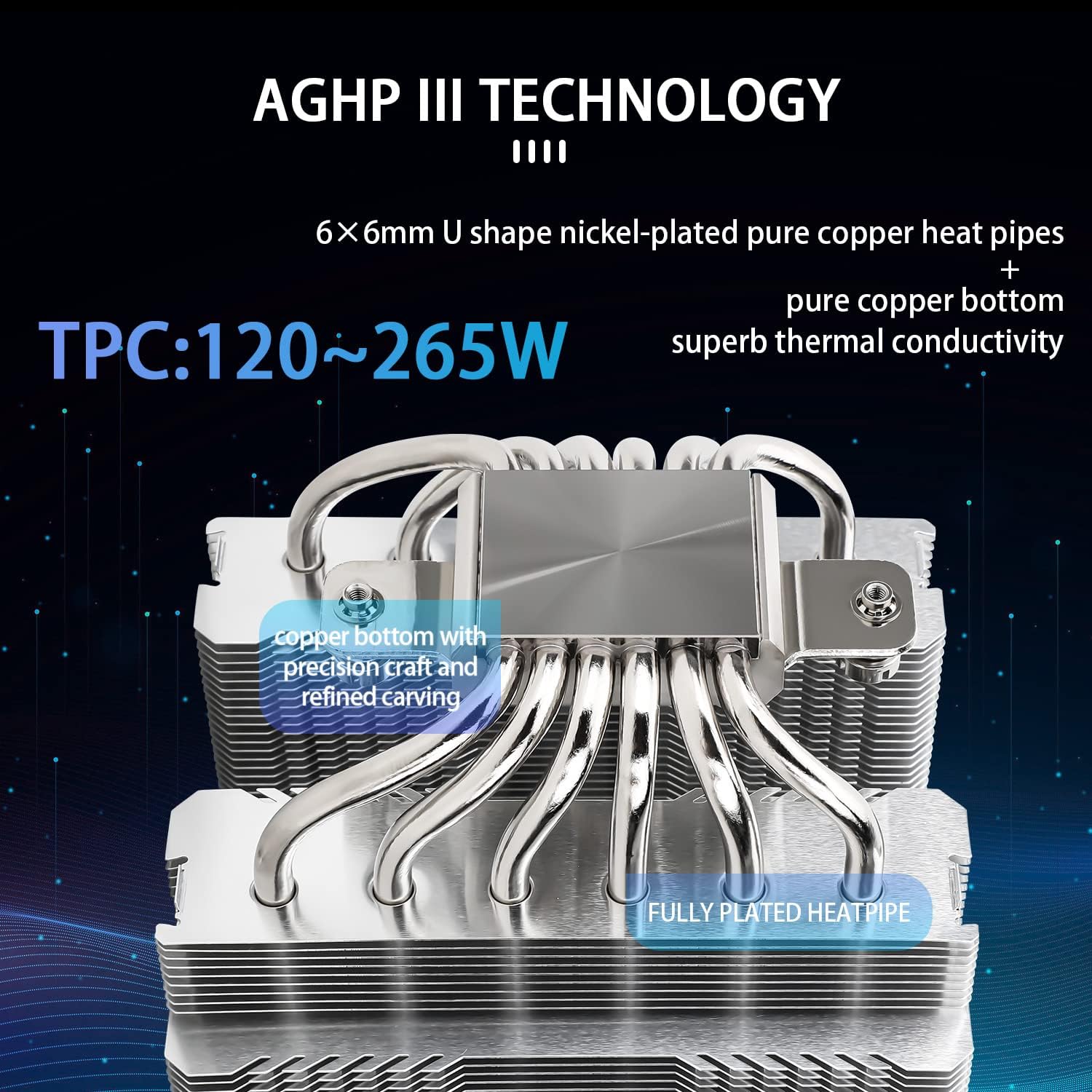
The hardware reasons are straightforward: five copper heatpipes, a nickel-plated base, and dual 120mm fans pulling push-pull airflow through the fin stack give the Peerless Assassin meaningfully more thermal transfer surface and airflow than its price implies. For anyone running a mid-range AM5 chip such as the Ryzen 5 7600X or Ryzen 7 9700X, or an older but still power-hungry AM4 part, this is the single-tower to beat in raw performance terms. PCMag’s Best CPU Coolers roundup for 2025 names it among the top value picks in the category, specifically noting its competitive position against coolers priced $20–$30 higher.
Thermalright
$34.90
In stock on Amazon
Check price on AmazonArctic Freezer 36 — Dual-Fan Value with Bundled Paste
The Freezer 36 lands right behind the Peerless Assassin in most published comparisons. Tom’s Hardware’s Arctic Freezer 36 review notes strong normalized performance at its price point, with the dual Arctic P12 pressure-optimized fans delivering solid static pressure through the fin array — a meaningful advantage in denser fin stacks where moving air through, not just across, the fins determines real-world temperatures.
The total-cost-of-ownership angle is genuine: Arctic bundles MX-6 thermal paste in the box. If you’re buying your first aftermarket cooler, that means you don’t need to budget $7–$10 separately for paste. The bundled compound is drawn from the same MX-6 formulation as retail tubes, with an identical rated thermal conductivity of 8.5 W/mK. For a single installation, the included quantity is fully adequate.

Cooler
$19.99
In stock on Amazon
Check price on AmazonCooler Master Hyper 212 Black Edition — A Veteran Showing Its Age
The Hyper 212 name carries enormous brand recognition, and the Black Edition is a genuinely capable cooler for stock-TDP chips in the 65–95W range. Tom’s Hardware’s Hyper 212 Black Edition coverage places it competitive against older single-fan designs but behind the dual-fan Peerless Assassin 120 SE and Freezer 36 at sustained loads. The gap is moderate at 65W; it widens at 105W and above.
Here is the documented installation friction point you need to know before you order: Tom’s Hardware’s installation notes for the Hyper 212 Black Edition flag the backplate design as requiring a builder to hold the plate against the rear of the motherboard while securing standoffs from the front. This is not a fluke complaint from a single impatient reviewer — it appears independently across multiple long-form reviews and is structural to how the backplate-to-standoff system works. If you’re building alone without removing the motherboard from the case, this is a genuine logistical problem. Solo installation is possible but significantly harder than competing designs that use self-retaining backplates.
Cooler
$19.99
In stock on Amazon
Check price on AmazonCooler Master Hyper 212 PRO ARGB — The $17 Lighting Win
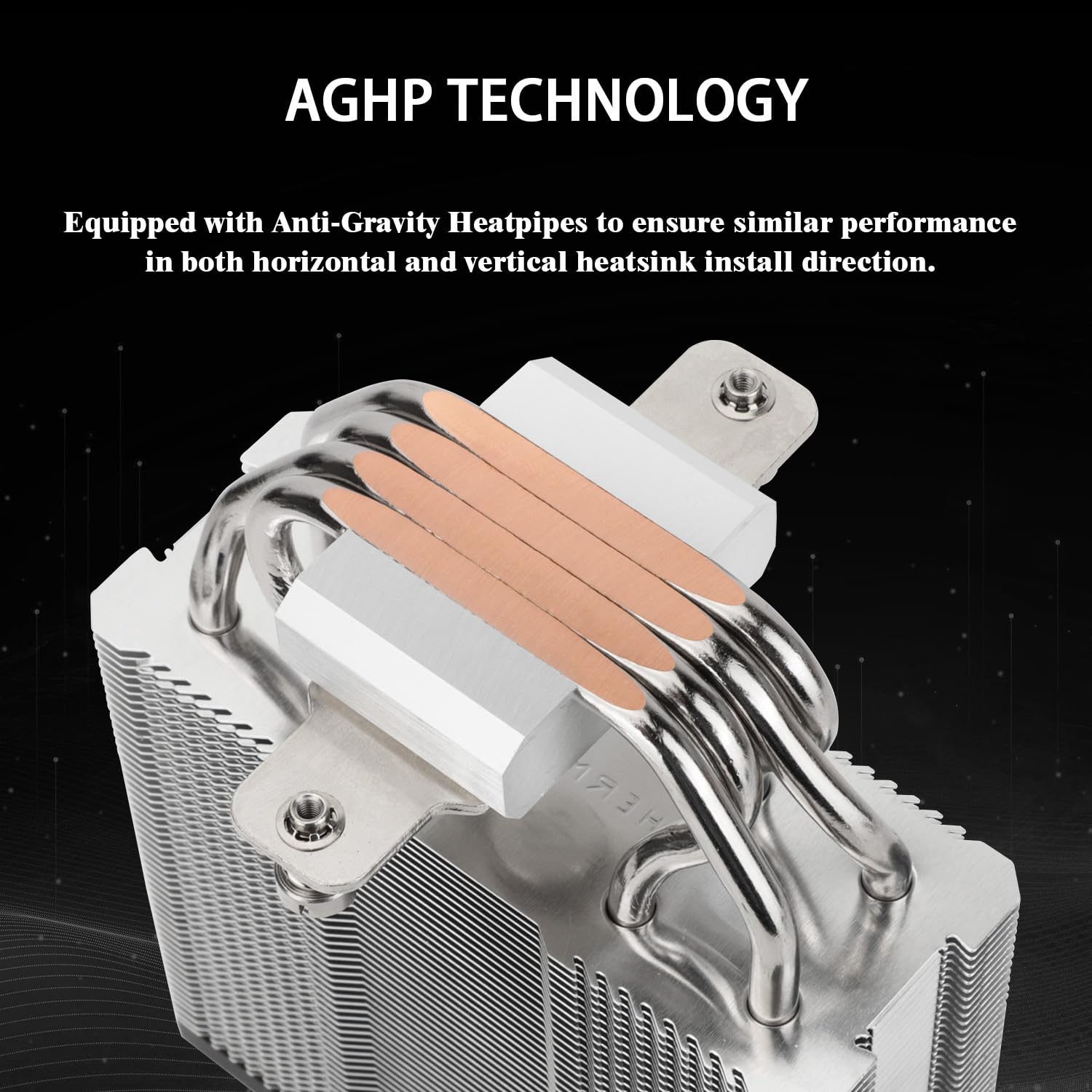
At street prices hovering around $17–$22 as of mid-2026, the Hyper 212 PRO ARGB occupies a different thermal-performance tier than the others — but it is not pretending otherwise. This cooler handles 65W chips without drama, and its ARGB implementation delivers consistent color reproduction across motherboard software ecosystems from ASUS Aura, Gigabyte RGB Fusion, and MSI Mystic Light. That matters to design-forward builders on a strict budget. If you’re building a modest Ryzen 5 or Core i5 system in a windowed case with an ARGB ecosystem, and $35 feels like a stretch, the PRO ARGB is an honest choice — just don’t ask it to tame a 105W chip running sustained all-core workloads.
Thermalright
$19.92
In stock on Amazon
Check price on Amazonbe quiet! Pure Rock Pro 3 — The Acoustics-First Argument
KitGuru’s Pure Rock Pro 3 review makes the key finding explicit: this cooler manages high core-count AMD CPUs — specifically the Ryzen 9 5900XT and Ryzen 9 9900X — under sustained workloads without thermal throttling, while maintaining notably lower audible fan noise than comparably priced competitors. Thermal throttling, for context, is when a chip is forced to reduce its clock speed to protect itself from excessive heat — you lose performance without any visible warning. be quiet!‘s 120mm BQ fan runs at a lower RPM ceiling by design, prioritizing near-silent operation.
The tradeoff is real: the Pure Rock Pro 3’s single-fan configuration and be quiet!‘s acoustic-first fan tuning leave some thermal headroom on the table compared to the Peerless Assassin’s dual-fan setup at equivalent noise levels. If your use case is a home-office workstation where you’re in the same room as the PC for eight hours a day, that acoustic margin may be worth more to you than the last few degrees of thermal headroom. If you’re running an overclocked chip pushing 130W sustained, it is the wrong tool. KitGuru’s review specifically praises the Pure Rock Pro 3’s balance for productivity-focused builds, calling it a standout in its price bracket for quiet operation.
Cooler
$19.99
In stock on Amazon
Check price on AmazonInstallation Experience: Friction Points Worth Planning Around
The installation narrative across this category breaks into two meaningful camps. The Arctic Freezer 36, Peerless Assassin 120 SE, and be quiet! Pure Rock Pro 3 all use AM5 and AM4 mounting systems that reviewers — including Tom’s Hardware’s installation coverage — consistently describe as manageable for a solo builder working inside a mid-tower case without removing the motherboard from the chassis. The Peerless Assassin 120 SE uses a tool-free AM5 adapter that clips to the existing backplate, which is one of the cleaner installation experiences in this price class.
The Hyper 212 Black Edition’s backplate approach, documented in Tom’s Hardware’s Hyper 212 Black Edition review and corroborated by long-form independent coverage, is the clear outlier. If you’re building with this cooler, plan for a helper or plan to install it before the motherboard goes into the case. This is not a dealbreaker if you know about it in advance — but it is a real source of frustration when discovered mid-build.
The Hyper 212 PRO ARGB uses a similar bracket system to the Black Edition but reviewers report slightly fewer complaints about the one-handed hold requirement, likely owing to lighter overall hardware weight at this variant’s spec level.
The Decision Framework: If X, Then Y
Here’s where we make this concrete. These are the decision rules that the thermal data and published reviewer consensus support:
If your CPU is 65W TDP or below and you want ARGB lighting: → Hyper 212 PRO ARGB. At ~$17–$22, it handles the thermal load, the ARGB implementation is genuinely solid, and you’re not paying for performance headroom you will not use.
If you want the strongest single-tower thermal performance under $40: → Peerless Assassin 120 SE. Tom’s Hardware and PCMag’s 2025 roundup both place it at the top of the sub-$40 single-tower class. The dual-fan push-pull configuration and five-heatpipe design are the reasons.
If you’re building solo, want dual-fan airflow, and don’t want to wrestle with a backplate: → Arctic Freezer 36. The included MX-6 paste is a genuine convenience for first-time builders, the mounting system is solo-friendly, and the dual P12 fans deliver performance that Tom’s Hardware’s Freezer 36 review confirms as competitive at this price.
If you’re building a quiet workstation — content creation, rendering, or a home office — and acoustic comfort is a professional requirement: → be quiet! Pure Rock Pro 3. KitGuru’s review on the Ryzen 9 5900XT and 9900X confirms it holds temperatures without throttling and does it more quietly than competing designs. For an always-on, always-present machine, that matters every hour of every workday.
If the Hyper 212 Black Edition is already in your cart: → Make sure you have a build partner or plan to mount before casing the motherboard. The thermal performance is fine for stock-speed chips in the 65–95W range; the installation design is the honest friction point you need to plan around.
Frequently Asked Questions
Does the Peerless Assassin 120 SE fit inside a Micro-ATX case with a tall GPU? It depends on your specific case. The Peerless Assassin 120 SE stands approximately 155mm tall; most Micro-ATX cases list their CPU cooler height clearance in their spec sheets. Confirm your case’s stated clearance before ordering. GPU clearance is a separate concern — the GPU sits in the PCIe slot and the cooler sits over the CPU socket, so interference is typically with the GPU heatsink’s top edge, not the card’s length.
Can the Hyper 212 Black Edition installation be done solo without removing the motherboard? Technically yes, practically difficult. The backplate must be held against the rear of the motherboard while you thread standoffs from the front. Tom’s Hardware’s installation notes on the Hyper 212 Black Edition describe this as a two-person task when the motherboard is already inside the case. If building solo, seat the cooler before installing the motherboard, or budget significant extra time and patience.
Does the Arctic Freezer 36’s included MX-6 paste perform as well as buying MX-6 separately? Yes. Arctic’s bundled compound is drawn from the same MX-6 formulation as retail tubes. The thermal conductivity rating is identical at 8.5 W/mK. The quantity is sized for a single application, which is fully adequate for one build.
Will the be quiet! Pure Rock Pro 3 keep the fans inaudible on a 65W AMD CPU? Under normal desktop workloads and light productivity tasks at ambient temperatures around 20–22°C, the Pure Rock Pro 3’s fan operates at very low RPM with minimal audible output. Under sustained all-core loads such as video encoding or 3D rendering, the fan will ramp up — but KitGuru’s coverage on higher-TDP chips including the Ryzen 9 9900X shows it stays quieter than competing designs. For a true 65W chip at light load in a reasonably cool room, near-silent behavior is the expected outcome.
Which of these coolers has the lowest profile height for clearance-constrained cases? The Arctic Freezer 36 at approximately 154mm is the shortest in this group, giving it a marginal edge in tight builds. The difference versus the Peerless Assassin 120 SE and Pure Rock Pro 3 (both approximately 155mm) is small — confirm your case’s exact clearance specification regardless.
Is the Hyper 212 PRO ARGB compatible with AM5 out of the box or does it need an adapter? Current retail versions of the Hyper 212 PRO ARGB ship with AM5 mounting hardware included in the box. If purchasing from existing inventory or used, verify the box explicitly lists AM5 support — earlier production runs predating AM5’s 2022 launch required a separate mounting kit. Check the Cooler Master product page for your specific SKU’s box contents list before ordering.